
Of all the senses, scent takes the shortest road to the parts of the brain that hold emotion and memory. A single breath of something familiar can change the pace of your heart before you have even named what you smell. That speed is exactly why aromatherapy deserves care, not guesswork.
A considered practice begins with quality. Pure essential oils are concentrated plant material, and a few drops carry far more than they seem. Look for the botanical name on the label, a dark glass bottle, and a supplier who can tell you where the plant was grown.
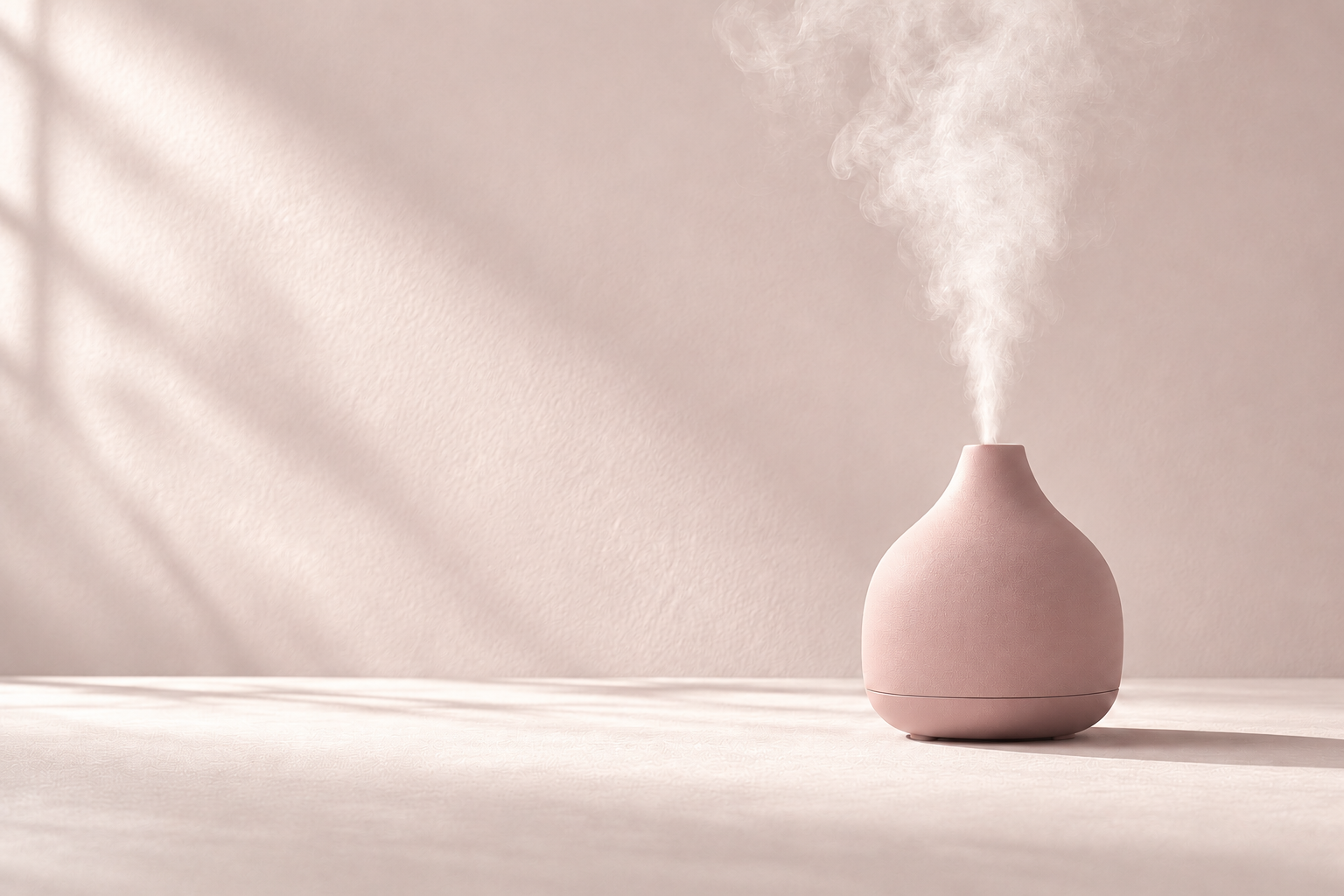
The second principle is dilution. On the skin, essential oils belong in a carrier oil such as jojoba or sweet almond, never applied neat. In the air, less is more: a few drops in a diffuser, for a short time, is enough to change the atmosphere of a room.
The third principle is intention. Instead of reaching for a scent at random, tie it to a moment of your day. Something bright and clean, like sweet orange or peppermint, for the morning. Something soft and grounding, like lavender or cedarwood, for the hour before sleep. Over time, your body begins to recognize the signal. The scent becomes a doorway into the state you want to return to.
Begin with one blend and one moment of the day. Let it become reliable before adding anything else. Notice how you breathe, how your shoulders settle, how quickly the room feels like yours again.
A few gentle reminders: keep oils away from children and pets, and if you are pregnant, nursing or caring for a health condition, check with your healthcare provider before you begin.
Aromatherapy is not about filling a room with fragrance. It is about choosing, with intention, what your nervous system meets.