
Lavender · Lavandula angustifolia
In a few words: One of the most beloved aromatic plants in the world. Its name is often traced to the Latin lavare, "to wash," a memory of the centuries when it scented the baths and linens of Europe. Its fragrance is soft, floral and quietly herbal, the scent of calm itself.
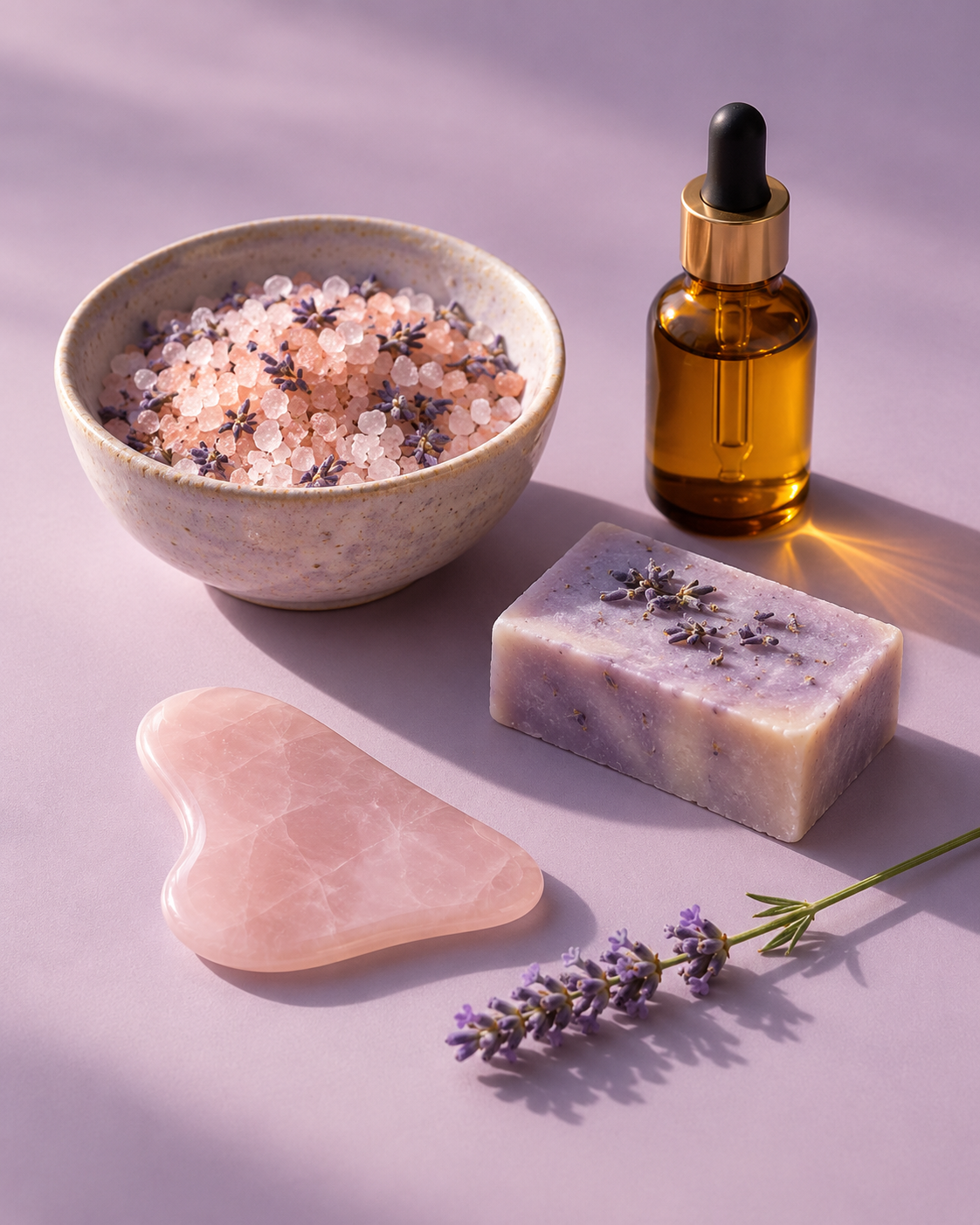
How I use it: Lavender belongs to my evenings. I let its scent find me in a warm bath, on freshly washed hands, in the soap I keep by the sink, in a candle glowing softly while the house grows quiet. It is the gentle signal that tells my body the day is folding itself away.
How I pair it: With warm water, low light and slow movements. Lavender also loves company: a touch of cedarwood makes it deeper and more grounding, and a little sweet orange makes it brighter and more joyful.
A little secret: True lavender carries the botanical name Lavandula angustifolia on its label. It is the one with the softest, sweetest fragrance, and the one I always choose for rituals of rest.